Real estate investors, brokers, and business owners are always looking for legal ways to reduce taxes, increase cash flow, and maximize returns. One of the most valuable yet underused strategies available is cost segregation.
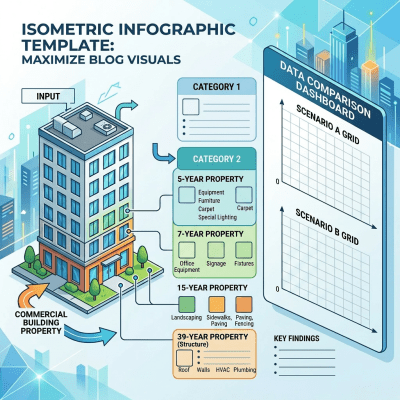
Cost segregation can create substantial upfront tax savings by accelerating depreciation deductions on qualifying components of a building. Instead of depreciating an entire commercial property over 39 years, certain parts of the property can be reclassified into shorter asset lives such as 5, 7, or 15 years—allowing you to recover costs much faster.
For many property owners, this means larger deductions now, improved cash flow, and more capital available to reinvest.
What Is Cost Segregation?
Cost segregation is an engineering-based tax strategy that analyzes a building and separates its components into different asset classes for depreciation purposes.
Rather than treating the entire building as one long-term asset, the study identifies items such as:
- Flooring
- Cabinetry
- Decorative lighting
- Parking lots
- Landscaping
- Security systems
- Specialty plumbing/electrical
- Land improvements
- Certain interior finishes
These assets may qualify for shorter depreciation periods.
Why Cost Segregation Matters
1. Accelerated Tax Deductions
The biggest advantage is faster depreciation. Instead of waiting decades, you may deduct portions of your property much sooner.
2. Increased Cash Flow
Lower taxable income can reduce current tax liability, leaving more cash in your business.
3. Reinvestment Opportunities
The additional cash can be used for:
- Renovations
- Marketing
- Hiring staff
- New investments
- Debt reduction
4. Time Value of Money
A tax deduction today is generally more valuable than the same deduction years later.
5. Catch-Up Deductions
Even if you bought the property years ago, you may still be able to perform a study and claim missed depreciation through accounting method changes.
Common Cost Segregation Asset Categories
5-Year Property
These are typically personal property items attached to the building but are not considered part of the structure.
Examples:
- Carpeting
- Appliances
- Decorative lighting
- Window treatments
- Specialized electrical equipment
- Cabinets not integral to structure
- Furniture and fixtures
7-Year Property
Often used for office furniture, fixtures, and certain equipment, depending on use.
Examples:
- Office furniture
- Fixtures
- Some movable partitions
- Equipment used in operations
15-Year Property
These are usually land improvements outside the building.
Examples:
- Parking lots
- Sidewalks
- Fencing
- Landscaping
- Outdoor lighting
- Retaining walls
- Drainage systems
- Signage
39-Year Property
This is the core commercial building structure.
Examples:
- Roof
- Foundation
- Structural walls
- HVAC systems (general building systems)
- Plumbing systems
- Electrical systems serving a building generally
- Elevators
- Permanent structural components
Example: Cost Segregation in Action
Imagine you purchase a $1,000,000 commercial building (excluding land).
A cost segregation study may reclassify:
- $200,000 to a 5-year property
- $75,000 to a 7-year property
- $150,000 to a 15-year property
- $575,000 remains on a 39-year property
This means a significant portion of depreciation is accelerated into earlier years instead of being spread mostly over 39 years.
Who Benefits Most from Cost Segregation?
Cost segregation can be valuable for owners of:
- Office buildings
- Retail centers
- Warehouses
- Medical offices
- Apartment buildings
- Short-term rentals (in some cases)
- Mixed-use properties
- Industrial facilities
Important Considerations
Cost segregation should be performed carefully and documented properly. A professional engineering-based study is typically recommended for IRS support.
Always coordinate with your:
- CPA
- Tax advisor
- Bookkeeper
- Cost segregation specialist
Summary of the Benefits
Cost segregation is one of the most powerful tax planning tools available to real estate owners. By identifying assets that qualify for shorter depreciation lives, owners may unlock substantial deductions earlier, improve cash flow, and free up money for growth.
Key Benefits Recap:
- Faster depreciation deductions
- Reduced current tax burden
- Increased cash flow
- More money to reinvest
- Stronger ROI on real estate holdings
- Opportunity to catch up on missed deductions
- Improved long-term wealth building
If used strategically, cost segregation can turn a building from a slow tax write-off into a powerful financial advantage.
 Dean Bookkeeping
Leave a comment